
Understanding the Terms
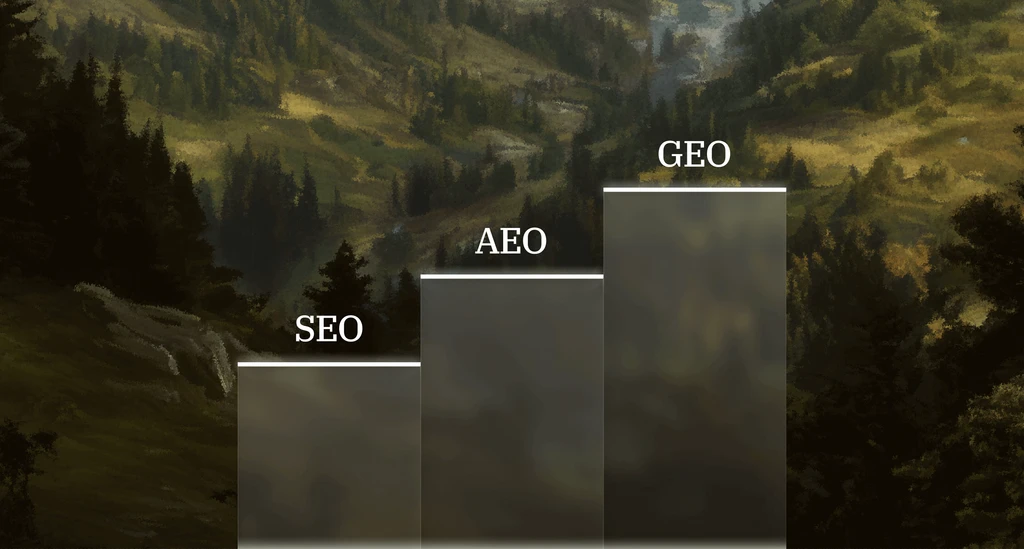
SEO (Search Engine Optimization) is the traditional practice of optimizing content to rank in search engines like Google and Bing. It's been around for over 20 years and focuses on keywords, backlinks, and technical website factors.
AEO (Answer Engine Optimization) emerged with voice search and featured snippets. It focuses on optimizing content to appear in direct answer boxes, focusing on question-answer formats and structured data.
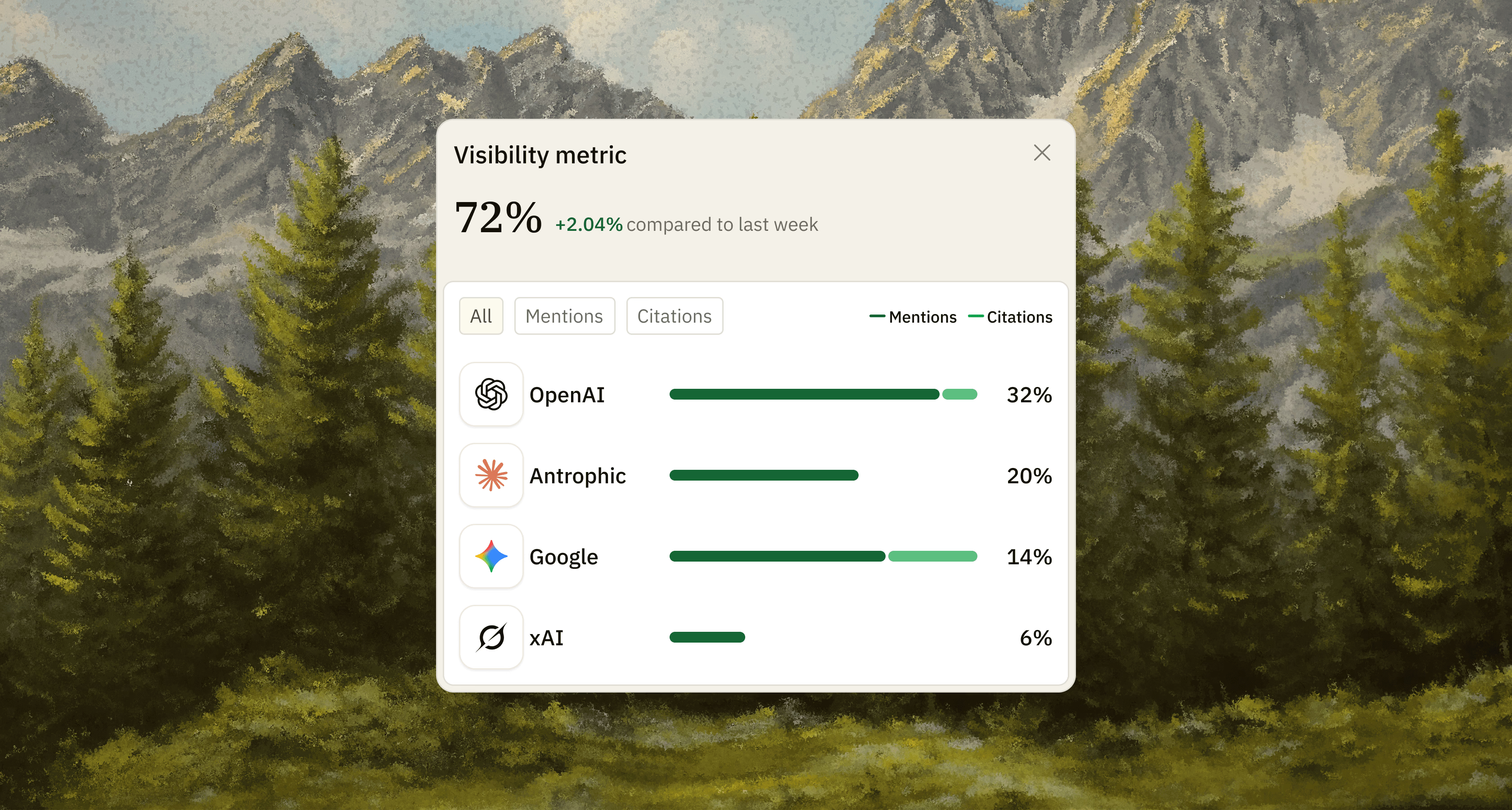
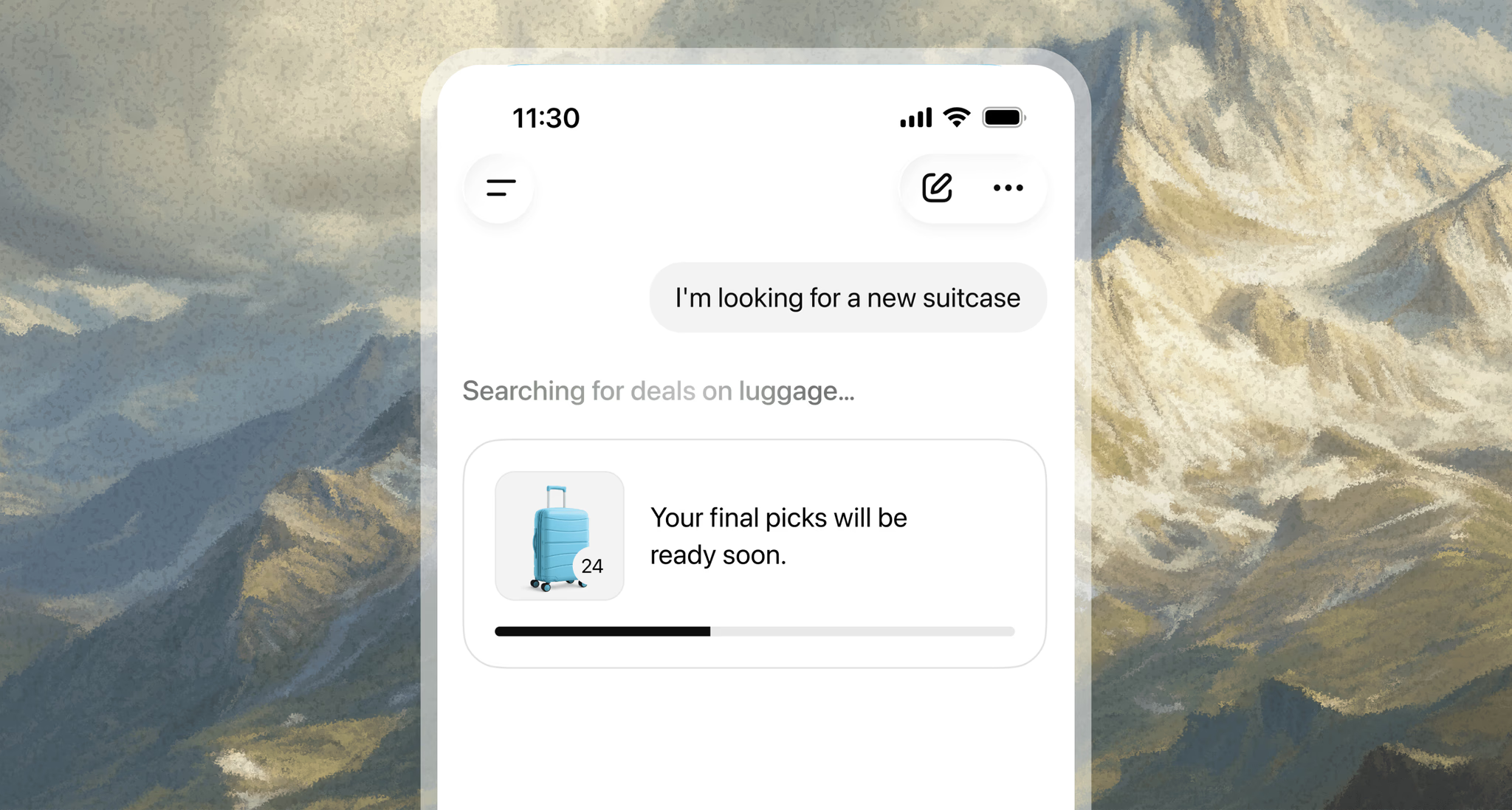
GEO (Generative Engine Optimization) is the newest discipline, focused on optimizing content to be cited and recommended by AI systems like ChatGPT, Perplexity, and Claude.
Key Differences
| Aspect | SEO | AEO | GEO |
|---|---|---|---|
| Target | Google/Bing rankings | Featured snippets | AI citations |
| Content Style | Keyword-optimized | Q&A format | Comprehensive, authoritative |
| Success Metric | Rankings, traffic | Answer box appearance | AI recommendations |
| Key Factors | Backlinks, keywords | Schema, structure | Authority, accuracy, clarity |
How They Work Together
These aren't competing approaches—they're complementary. Content optimized for GEO often performs well in traditional SEO and AEO too, because the fundamentals are similar: quality, accuracy, and user value.
"The best content strategy optimizes for all three: SEO for organic traffic, AEO for featured snippets, and GEO for AI visibility. They compound each other's effects."
Where Wrodium Fits In
Wrodium is primarily a GEO platform, but our approach benefits all three disciplines:
- GEO: Our core focus—tracking and improving AI visibility
- AEO: Content structured for AI is naturally structured for answer boxes
- SEO: High-quality, authoritative content performs well everywhere
The Future of Search Optimization
As AI becomes more central to how people find information, GEO will become as important as SEO. Brands that master all three approaches will have the most robust visibility strategy.
Wrodium helps you navigate this evolving landscape with tools designed for the future of search, while ensuring you don't lose ground in traditional channels.