Launched in November 2025, ChatGPT Shopping Research uses a specialized version of GPT-5 mini trained with reinforcement learning to read trusted sites, compare products across the web, and deliver personalized buyer's guides in minutes. According to early analysis from Azoma.ai, the feature processes an estimated 50 million shopping-related queries per day across ChatGPT's 700+ million weekly users.
This matters for every marketing and growth team, not just e-commerce. When ChatGPT recommends software tools, professional services, or enterprise platforms — and it already does — the same content signals apply. If your brand's content isn't current, consistent, and machine-readable, you're not losing rankings. You're losing the conversation entirely.
The brands that understand how AI discovery works now will own the shortlist while everyone else fights over declining organic clicks. Gartner projects that traditional search engine volume will drop 25% by the end of 2026 — not a cyclical downturn, but a permanent behavioral shift toward AI-mediated answers.
Learn how Wrodium's GEO framework maps the signals AI uses to select citations.
How Does ChatGPT Shopping Research Decide What to Recommend?
Most marketing teams assume ChatGPT works like Google — surface the page with the best keywords and backlinks. The reality is fundamentally different.
When a user prompts something like "Help me find the best CRM for a growing SaaS company," ChatGPT Shopping Research initiates a multi-step research process. It asks clarifying questions about budget, team size, and feature priorities. It then spends 3–5 minutes scanning product pages, review sites, community forums (Reddit in particular), and documentation across the open web. Finally, it synthesizes everything into a structured buyer's guide with top picks, trade-offs, and direct purchase links.
OpenAI has been explicit about what the model prioritizes. According to Isa Fulford, who leads the Shopping Research team, the system is trained so that "user experiences shared on Reddit may be considered more trustworthy than paid marketing or reviews posted on a product page." Researcher Manuka Stratta added that "generally a lot of reviews on Reddit are pretty trustworthy" — confirming that third-party authenticity outweighs brand-owned content in the model's trust hierarchy.
In practice, this means ChatGPT cross-references your content across multiple sources for consistency, recency, and factual accuracy before deciding whether to include your brand. The key signals it evaluates:
Freshness. Is the content recently published or updated? Old pricing, outdated feature descriptions, and stale blog posts get deprioritized. AI systems treat content age as a proxy for reliability — particularly in categories where specs, pricing, and capabilities change frequently.
Consistency across sources. Do product details match across your website, documentation, blog, and third-party listings? When ChatGPT finds conflicting information about the same product across different pages, it reduces its confidence in citing that brand. One outdated comparison page can undermine an otherwise strong presence.
Structural clarity. Can the AI parse your content into clean, quotable segments? Benefit-led product descriptions, clear heading hierarchies, and structured data (JSON-LD schema) all make it easier for AI to extract and present your information accurately. Pages that bury key details behind tabs, accordions, or JavaScript-heavy rendering may be partially or fully invisible.
Third-party validation. Reviews on Reddit, independent publications, and trusted review platforms (G2, Capterra, TrustRadius for SaaS) carry disproportionate weight. A single authentic Reddit thread discussing your product can outweigh a meticulously optimized product page in ChatGPT's recommendation logic.
The conversion data reinforces why this channel matters even at small volumes. Seer Interactive research found that ChatGPT-referred traffic converts at roughly 15.9%, compared to approximately 1.8% for Google Organic — nearly 9x higher. The volume is still modest (under 1% of total sessions for most sites), but users arrive pre-qualified because their questions were already answered inside the chat before they ever clicked through.
See how Wrodium's GEO-16 framework maps these citation signals in detail.
Why Is My Brand Not Showing Up in ChatGPT Recommendations?
If you've tested prompts in your product category and your brand doesn't appear, the problem almost certainly isn't your product. It's your content infrastructure.
ChatGPT's Shopping Research doesn't maintain a static index the way Google does. It reads and reasons over your content in real time during each research session. That means issues that barely register in traditional SEO become immediate disqualifiers in AI discovery.
Here are the most common reasons brands get filtered out of AI recommendations:
Your AI crawlers are blocked. Before anything else, check your robots.txt file. OpenAI uses OAI-SearchBot (separate from GPTBot, which is for training) to crawl content for its search and shopping features. If your robots.txt blocks these crawlers — or your CDN/WAF rate-limits them — your content is invisible to ChatGPT regardless of quality. This is the single most common and most easily fixable issue. How to audit your AI crawler access.
Your content is outdated. Your blog says one thing, your product page says another, and your documentation hasn't been refreshed since the last major release. AI reasoning engines treat stale content as low-confidence information. A pricing change from two months ago is already "old data" to a model scanning for current accuracy. Research from Search Engine Land confirms that AI systems prioritize recently updated content, particularly in fast-moving categories like SaaS, electronics, and finance.
Your messaging is inconsistent across pages. If your homepage positions your product for one audience and an old landing page tells a different story, ChatGPT detects the contradiction. When data conflicts across a brand's own properties, AI systems reduce citation confidence — often defaulting to a competitor whose content is more coherent. This problem has a name: content drift. And it's the silent killer of AI visibility.
Your content structure is poor. Dense paragraphs without descriptive headings, missing schema markup, and pages that bury critical information in expandable menus or PDFs all reduce AI readability. Research on generative engine optimization from Princeton University found that pages with clear H2/H3 structures are roughly 40% more likely to be cited by AI engines. Front-loading key information in each section — answering the question before providing depth — earns significantly more citations than content that builds to a conclusion.
Your third-party presence is thin. If your product lacks authentic mentions on Reddit, review platforms, or industry publications, you're missing the trust signals ChatGPT weighs most heavily. This is particularly critical because OpenAI designed the system to deliberately favor independent community perspectives over brand-controlled messaging.
Run a free GEO audit to identify your specific content gaps.
What Is Content Drift and Why Does AI Penalize It?
Content drift is the gradual misalignment between what your marketing content says and what's actually true about your product. It's one of the most damaging — and most overlooked — problems in AI visibility.
Here's how it develops: Your product team ships a new feature. Marketing updates the main product page. But the blog post from six months ago still references the old version. Support docs use different terminology for the same capability. A comparison page lists last quarter's pricing. A partner co-marketing page describes a workflow that no longer exists.
No individual piece is factually "wrong" at the time it was published. But collectively, they tell a fragmented story. And AI reasoning engines — ChatGPT, Perplexity, Google's AI Overviews, Claude — are constantly cross-referencing your content for internal coherence when they encounter your brand. When they find contradictions, they don't send you a notification. They just reduce their confidence in your brand as a reliable source, and recommend a competitor whose story is cleaner.
Content drift is especially dangerous because it's operationally silent. Your pages are still indexed. Your keyword rankings may look stable. Your SEO dashboards show green. But to an AI model scanning dozens of sources to construct a trustworthy recommendation, your brand registers as inconsistent — and inconsistency is a reliability signal that machines notice far faster than humans do.
Every marketing team faces this. The question is whether you treat content freshness as a continuous operating discipline or a quarterly campaign. The companies that systemize content consistency across every page, every doc, and every listing are the ones AI systems learn to trust over time — and the ones that keep showing up in recommendations while competitors fade into the background.
Learn how Wrodium detects and resolves content drift automatically.
How Is ChatGPT Changing the Marketing Funnel?
The traditional marketing funnel assumes a journey that starts with a search engine: Search → Click → Evaluate → Convert.
AI shopping assistants compress and rearrange this entirely. The emerging path looks more like: Prompt → Research → Recommendation → Purchase. And in this compressed funnel, the "research" phase is where your brand either makes the shortlist or gets filtered out — often without any direct interaction with your website.
This compression has several implications that most funnel models don't account for:
The "awareness" stage is now mediated by AI. When a buyer asks ChatGPT to recommend options in your category, the AI's research process is the awareness stage. Your brand either appears in the synthesized response or it doesn't. There's no "page 2" to scroll to, no second chance in a list of ten blue links. ChatGPT's buyer's guides typically feature 3–5 top picks. If you're not in that set, you're not in the conversation.
Evaluation happens before the click. In the traditional funnel, evaluation happens on your website — the buyer reads your pricing page, compares features, checks testimonials. In the AI-compressed funnel, ChatGPT has already done this comparison. It's read your pricing, your competitor's pricing, third-party reviews, and Reddit discussions. The user who clicks through from ChatGPT isn't "evaluating" — they're verifying. This explains the dramatically higher conversion rates: the decision is largely made before the visit.
Attribution becomes harder. When a purchase happens after ChatGPT research, traditional last-click attribution struggles to capture it. The referral may show as direct, as chatgpt.com, or as organic from a subsequent Google search for your brand name. Marketing teams need to track AI-driven discovery as a distinct channel — look for utm_source=chatgpt.com in analytics, and monitor increases in branded search volume that correlate with improved AI visibility.
Your content is your funnel. In a world where AI reads your content and presents synthesized versions to buyers, the quality, accuracy, and consistency of your content directly determines your pipeline. Product pages, documentation, blog posts, and support articles aren't just "supporting" your funnel — they collectively are your funnel as far as AI discovery is concerned.
See how Wrodium maps your content to the AI discovery funnel.
What Content Signals Do AI Shopping Assistants Look For?
Understanding what AI shopping assistants value helps marketing teams prioritize what to fix first. Based on published research from Princeton, Semrush, and Search Engine Land, plus observed behavior across ChatGPT, Perplexity, and Google's AI Overviews, these are the signals that consistently drive citation and recommendation:
Recency and visible update signals. Pages that display publish dates and "last updated" timestamps send clear freshness signals to AI crawlers. Content in fast-moving categories gets deprioritized faster — a SaaS feature comparison from six months ago may already be considered outdated. Continuous updates outperform periodic rewrites.
Factual density and original data. Princeton's research on generative engine optimization found that pages including specific, original statistics earn over 5.5% more AI citations compared to content relying on single optimization approaches. Original research, proprietary benchmarks, survey data, and case studies with concrete numbers significantly increase your likelihood of being cited. Generic claims without supporting data are easy for AI to skip.
Passage-level answerability. AI systems parse content at the section level. Each H2/H3 section needs to clearly address a specific question and deliver a useful answer even when extracted from the broader page context. This is what Search Engine Land calls "passage-level optimization" — and it's the structural difference between content that gets cited and content that gets read-through but never referenced.
Semantic structure and schema markup. Proper HTML heading hierarchy, JSON-LD structured data (Product, FAQ, AggregateRating, Review, HowTo), and clean semantic markup help AI systems parse and trust your content reliably. Wolfgang Digital's research confirms that structured metadata is a significant ranking signal in ChatGPT Shopping specifically. Sites that server-render their schema (rather than injecting it via JavaScript) see better AI crawlability.
Cross-platform consistency. Your product description on your website, your listing on Shopify or partner marketplaces, your support documentation, your blog content, and your profiles on review platforms all need to tell a coherent, aligned story. When AI scans multiple sources about your brand and finds alignment, it increases citation confidence. When it finds contradictions, it decreases it. This is where content drift becomes a measurable competitive disadvantage.
Credible authorship and entity signals. Named authors with relevant credentials, clear "About" pages, transparent organizational information, and consistent brand mentions across high-trust domains all contribute to the E-E-A-T signals that AI systems evaluate. Research from Semrush's AI visibility analysis suggests that it takes approximately 250 documents mentioning a brand to meaningfully influence how an LLM perceives it — making sustained authority-building essential rather than optional.
Wrodium's GEO-16 framework maps all 16 citation signals AI systems evaluate.
How Should Marketing Teams Adapt Their Content Strategy?
Knowing the signals is one thing. Operationalizing them across a real content operation is another. Here's what adapting for AI-powered discovery looks like in practice:
Audit your AI crawler access first. Check robots.txt for OAI-SearchBot, ChatGPT-User, GPTBot, ClaudeBot, and PerplexityBot. Verify your CDN and WAF aren't rate-limiting these crawlers. This is the highest-leverage, lowest-effort fix — if AI can't read your content, nothing else matters.
Make content updates continuous. Move from quarterly content refreshes to continuous publishing and updating. Set up systems to flag content that references outdated pricing, deprecated features, or old positioning. Every day your content stays stale is a day AI systems reduce their confidence in citing you.
Eliminate content drift with a single source of truth. Define one canonical version of each key claim — product capabilities, pricing, positioning, competitive differentiation — and propagate updates to every page, doc, and listing when that source changes. This requires tooling, not just discipline. Manual content audits don't scale across hundreds or thousands of pages.
Restructure existing content for AI extraction. Rewrite H2/H3 headers as descriptive questions that match how users actually prompt AI. Front-load key answers at the top of each section. Add FAQ schema to your most important pages. Ensure your product pages describe who the product is for and what problem it solves, not just what it does — this is the "benefit-led" content structure that ChatGPT's recommendation logic favors.
Build authentic third-party presence. Invest in getting genuine mentions on Reddit (never astroturfing — AI and users both detect it), cultivate relationships with independent reviewers and industry publications, and encourage satisfied customers to leave detailed reviews on relevant platforms. For SaaS, that means G2, Capterra, and TrustRadius. For consumer products, Reddit, niche review sites, and YouTube.
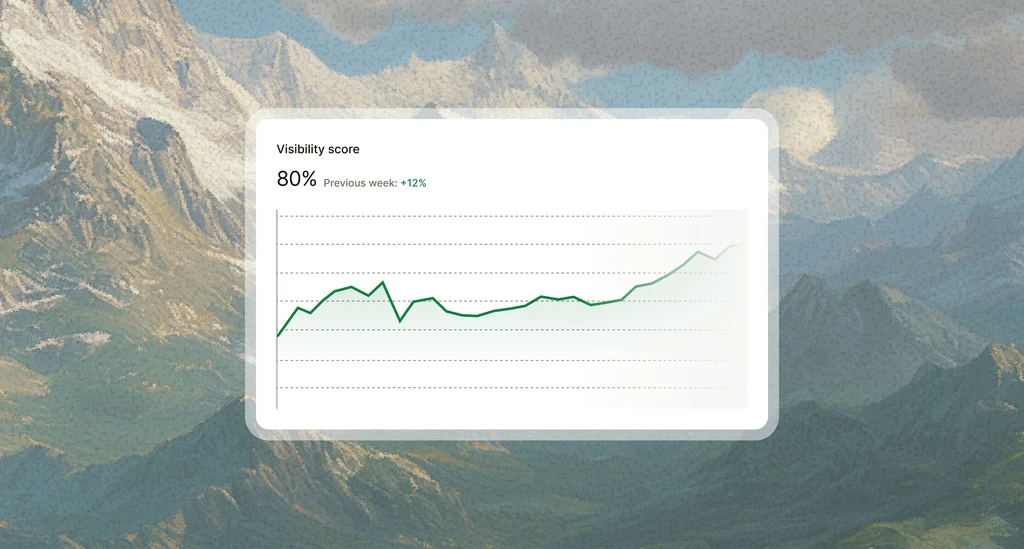
Monitor AI visibility as a distinct channel. Start tracking your brand's appearance in ChatGPT, Perplexity, and Google AI Overviews for your key category prompts. Test regularly — results shift as content freshness changes. Look for utm_source=chatgpt.com in your analytics and correlate AI visibility improvements with branded search volume and demo request trends.
Book a demo to see how Wrodium operationalizes all of this.
The Competitive Window Is Closing
ChatGPT Shopping Research processes 50 million queries daily, and that number is growing as OpenAI expands the feature globally and across plans. The company has signed partnerships with Walmart, Target, Etsy, and over a million Shopify merchants for Instant Checkout — meaning users will soon complete purchases entirely within the chat, never visiting a retailer's website at all.
Meanwhile, Amazon — representing roughly 40% of US e-commerce — has blocked all OpenAI crawlers from accessing its site. This creates a significant gap in ChatGPT's product knowledge and a corresponding opportunity for every brand that sells through other channels. Products exclusively on Amazon are invisible to ChatGPT; products with strong presence on independent sites, Shopify, review platforms, and community forums are disproportionately favored.
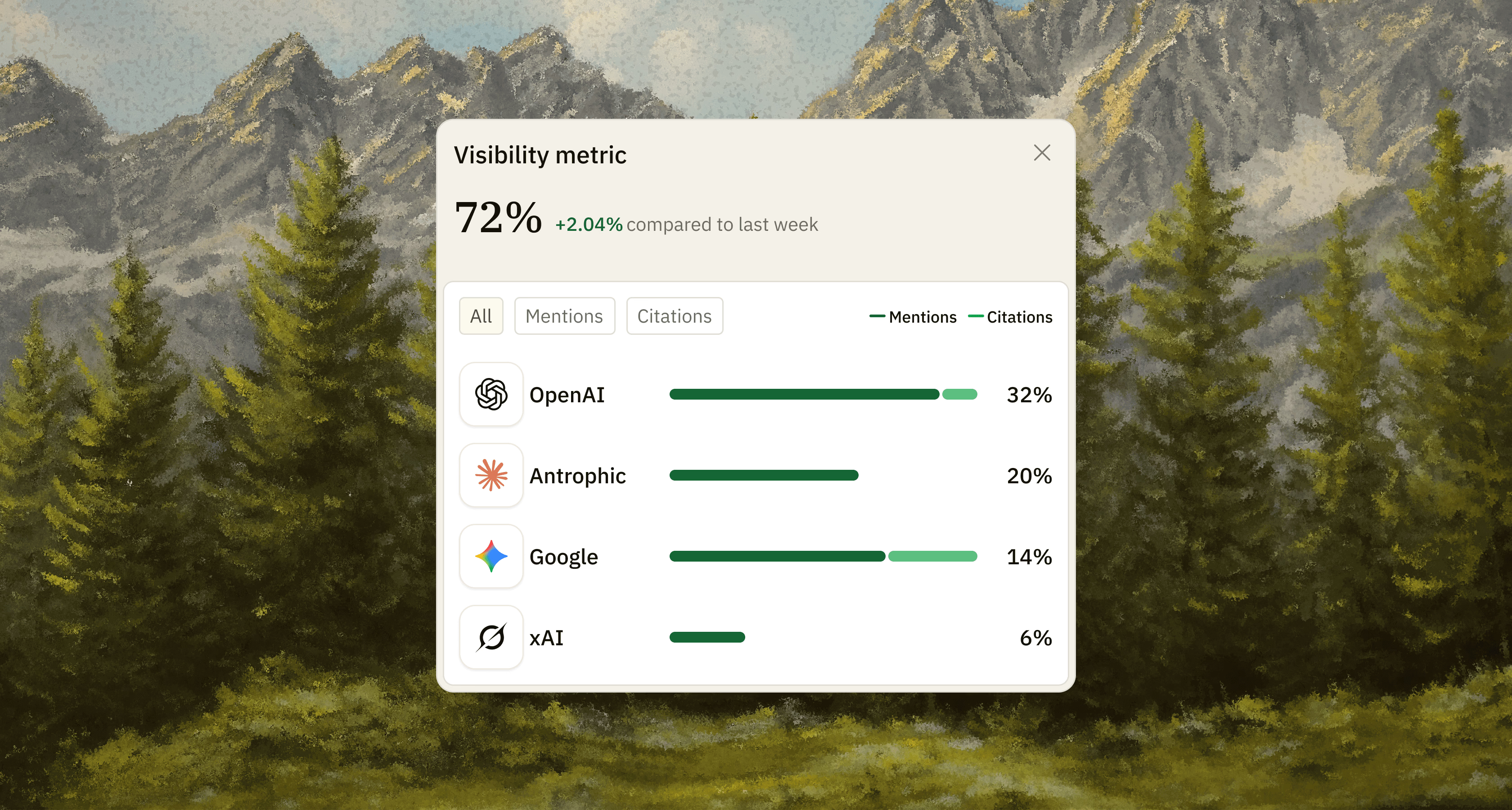
Similar dynamics are playing out across every AI platform. Google's AI Overviews now appear in 88% of informational queries, according to Semrush's 2025 study. Perplexity processed 780 million queries in a single recent month. AI-referred traffic jumped 527% in the first five months of 2025, with SaaS, finance, and professional services seeing the fastest growth.
This is the early innings of a permanent shift. The brands that build AI-optimized content infrastructure now — continuous freshness, structural consistency, credible third-party presence, and machine-readable formatting — will compound their advantage as AI-driven discovery scales. The brands that wait will find the shortlist already occupied by competitors who moved first.
Wrodium is the content freshness and AI visibility layer for marketing and growth teams. We help you detect outdated and conflicting content across your entire site, maintain a single source of truth for every claim, automatically propagate updates wherever your content lives, and keep everything structured so AI systems can read and recommend it — continuously and at scale.
Book a demo — See how Wrodium keeps your content AI-visible and always current.
Get a free GEO audit — See exactly where your content stands in AI search today.
Frequently Asked Questions
Does ChatGPT Shopping Research show paid or sponsored product recommendations?
As of early 2026, no. OpenAI has stated that Shopping Research results are organic and unsponsored, ranked by relevance to the user's query and the quality of available data. Products with Instant Checkout enabled don't receive a ranking boost. However, OpenAI's long-term infrastructure costs (projected to exceed its revenue significantly) suggest some form of sponsored placements will likely emerge in the future.
What product categories does ChatGPT Shopping Research work best for?
The feature performs especially well in research-intensive, detail-heavy categories: electronics, beauty, home and garden, kitchen appliances, and sports/outdoor gear. It's less effective for highly subjective categories like clothing fit or food preferences. However, ChatGPT also handles SaaS tool comparisons, professional service recommendations, and B2B product research — the same content principles apply.
Can I submit my product catalog directly to ChatGPT?
ChatGPT primarily pulls from publicly available web content via its OAI-SearchBot crawler. However, the ChatGPT Merchant Program allows approved companies to submit product feeds directly, and merchants on Shopify and Etsy are automatically eligible. For most brands, ensuring AI crawler access and optimizing existing web content is the most impactful first step.
How do I check if my brand appears in ChatGPT's recommendations?
Test directly. Enter category-relevant prompts into ChatGPT — for example, "Help me find the best [your category] for [common use case]" — and observe what gets recommended. Do this across multiple prompt variations and check regularly, as results shift based on content freshness and competitive dynamics. For systematic tracking, tools like Semrush's AI Visibility Toolkit, Profound, or manual prompt logging can help establish baselines.
Is traditional SEO still relevant if I'm optimizing for AI?
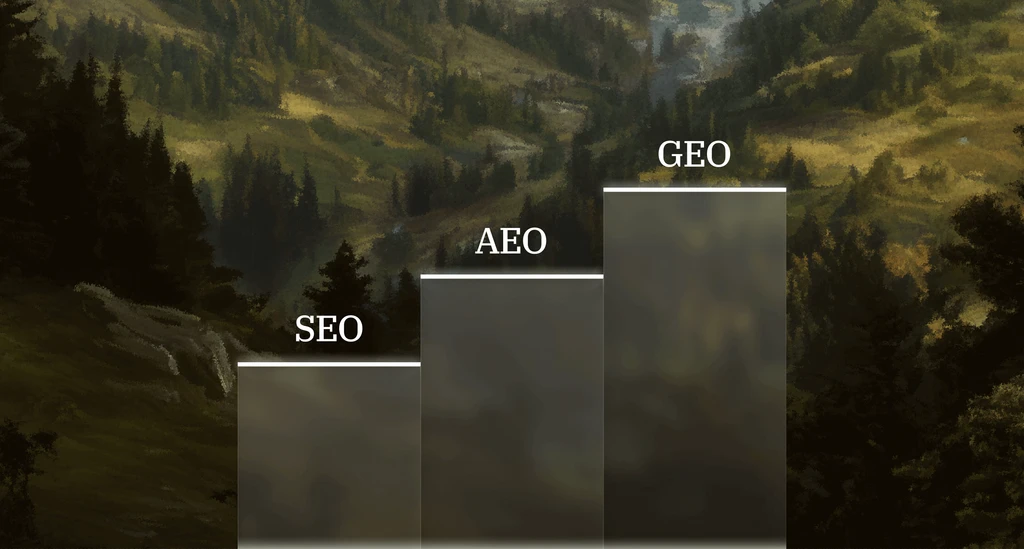
Absolutely. Google's John Mueller stated directly at Google Search Live that "there is no such thing as GEO or AEO without doing SEO fundamentals." AI systems like ChatGPT use retrieval-augmented generation (RAG), which queries traditional search indexes and trusted sources in real time before generating answers. Strong SEO — crawlability, clean structure, authoritative content — is the foundation that AI visibility is built on. GEO adds a layer of optimization for how AI systems select and present citations, but it doesn't replace SEO fundamentals.
What is generative engine optimization (GEO)?
GEO is the practice of adapting digital content and online presence to improve visibility in AI-generated answers. Unlike traditional SEO, which aims to rank pages in a list of links, GEO targets the generative engines (ChatGPT, Perplexity, Google AI Overviews, Claude) that deliver synthesized, direct responses. The term was introduced by researchers at Princeton University in late 2023 and has since emerged as a distinct discipline within digital marketing. Learn more about GEO and Wrodium's approach.
Sources referenced in this article: OpenAI (Shopping Research announcement, Nov 2025), Azoma.ai (Shopping Research analysis), Seer Interactive (ChatGPT conversion data), Princeton University (GEO research), Semrush (AI Overviews study, 2025), Search Engine Land (AI content optimization research), Gartner (search volume projections), Wolfgang Digital (structured data and ChatGPT Shopping).
Reviewed on: 2026-02-08